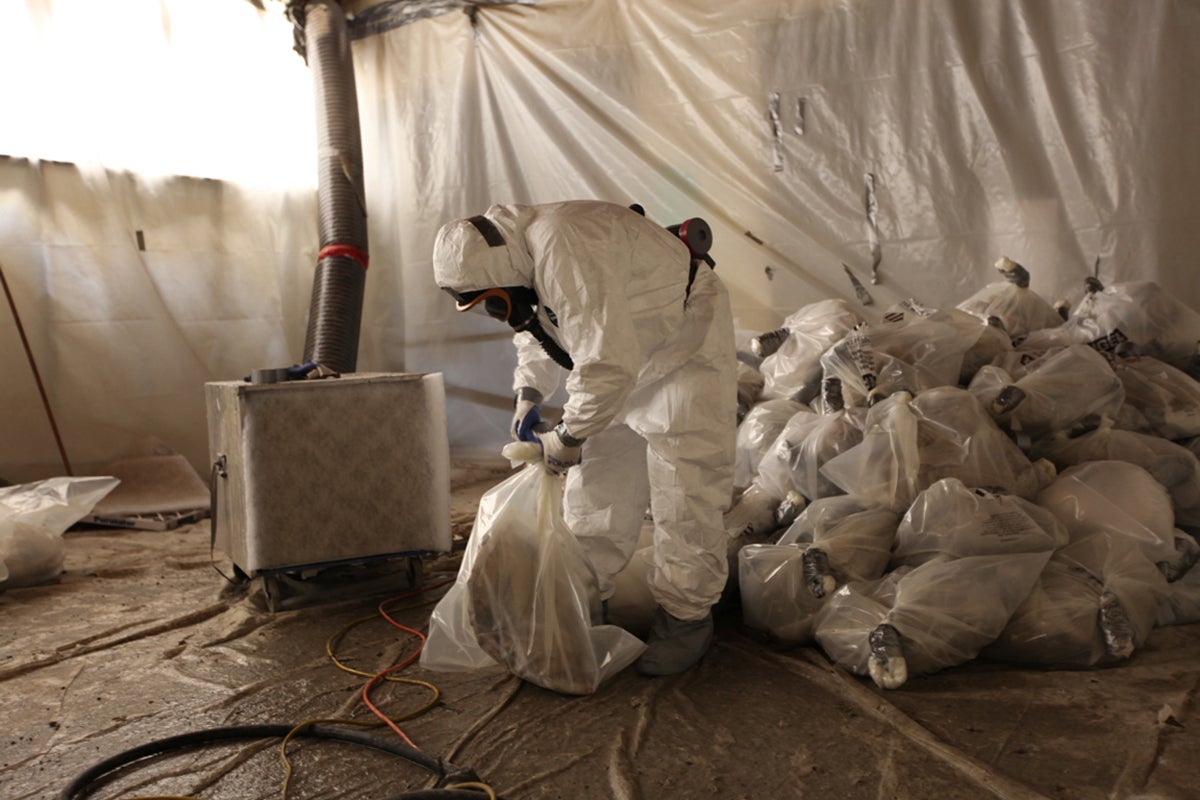
When asbestos is discovered in a Grand Junction home, Rapid Response follows strict, professional safety measures to protect occupants, workers, and the community while delivering compliant abatement and clear documentation.
Introduction: Why rigorous asbestos safety matters in Grand Junction
Asbestos fibers, when disturbed, can become airborne and pose long-term health risks to people living in affected homes. Rapid Response approaches every residential asbestos project in Grand Junction with a standardized, safety-first protocol designed to isolate hazardous materials, control fiber release, ensure regulatory compliance, and document every step for homeowner confidence. This post explains the company’s specific safety practices, permits and regulatory steps, site containment and engineering controls, worker protection and training, waste handling and disposal, air monitoring and clearance testing, and the communication and documentation processes Rapid Response uses to deliver safe asbestos removal in the Grand Junction area.
Rapid Response: local credentials and experience you can trust
Rapid Response is a locally based restoration and abatement company serving Grand Junction and the Western Colorado region; they emphasize decades of hands-on experience in disaster restoration and environmental services and advertise more than 30 years serving the area. The company is staffed with licensed and certified technicians who perform asbestos inspection, testing, and full remediation for residential and commercial clients in Grand Junction neighborhoods, working under insurance and regulatory requirements and offering 24/7 contact options for urgent situations. Rapid Response is insured and describes a proven track record handling emergency discoveries, renovation-related removals, and larger commercial abatement projects across Grand Junction and surrounding communities.
Those local roots mean Rapid Response has operational familiarity with Grand Junction neighborhoods and facilities such as the historic Hilltop area, downtown near the Colorado River corridor, and nearby sites like Lincoln Park, Canyon View Park, and the Colorado Mesa University vicinity — enabling fast response and an understanding of local permitting, disposal routing, and community expectations.
Overview of Rapid Response’s asbestos safety program
Rapid Response’s asbestos safety program for Grand Junction homes follows a consistent workflow that prioritizes safety and transparency from inspection to clearance report. Key program elements are:
- Comprehensive inspection and testing: sampling suspect materials and laboratory analysis to confirm asbestos content and identify regulated materials.
- Written scope and estimates: a detailed project plan and line‑item cost breakdown for containment, labor, testing, disposal, and any emergency mobilization.
- Regulatory coordination and permits: handling permits and required notifications so the project complies with federal, state, and local rules.
- Engineering controls and containment: negative air systems, physical barriers, and wet methods to reduce fiber release during removal.
- Worker qualification and PPE: licensed, trained technicians using respirators and protective suits; strict decontamination procedures.
- Waste handling and disposal: regulated handling, proper packaging, transportation, and disposal at approved facilities.
- Air monitoring and post‑remediation clearance: air testing and clearance documentation to confirm safe re‑occupancy.
- Transparent documentation: written plans, permits, testing results, and final reports provided to homeowners and stakeholders.
Step-by-step: How Rapid Response protects people and property during removal
The following section walks through Rapid Response’s stepwise safety process as applied to a typical Grand Junction residential asbestos abatement project. This reflects the company’s on-site practices and promises to homeowners seeking safe, compliant asbestos work.
1) Initial contact, emergency mobilization, and inspection
Rapid Response offers emergency on-site arrival capability for asbestos discoveries; the company advertises rapid mobilization to Grand Junction properties — often within a few hours for urgent scenarios. Upon arrival, technicians conduct a thorough visual inspection and collect representative samples of suspect materials for laboratory analysis. This initial phase identifies where asbestos-containing materials (ACMs) exist, assesses the extent of damage or disturbance, and determines whether immediate containment is required to protect occupants.
2) Written project scope, estimate, and regulatory coordination
After inspection and testing, Rapid Response prepares a detailed, written scope of work and a line-item estimate that clearly states the costs and procedures for containment, labor, air monitoring, testing, removal, and disposal. For larger or regulated projects the company handles permits and regulatory notifications required by jurisdictions and coordinates with local authorities and inspectors in the Grand Junction area. This documentation ensures homeowners understand the planned controls, timeline, and responsibilities before work begins.
3) Site preparation and containment
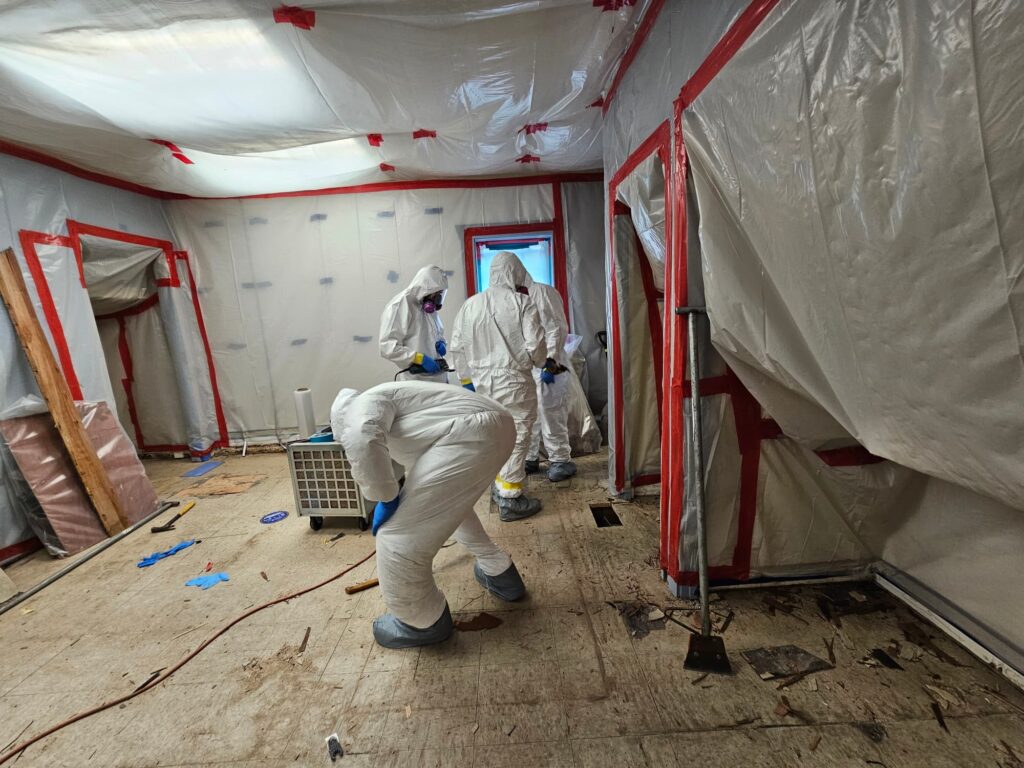
Containment is a primary control used by Rapid Response to prevent asbestos fibers from spreading beyond the work area. Typical containment measures include installing airtight enclosures using 6‑mil or thicker polyethylene sheeting to isolate the work zone, setting up decontamination units with separate clean and dirty areas for technicians, and sealing HVAC vents or disconnecting systems that could draw fibers through a home. Physical barriers and posted signage are used to keep household members, visitors, and non‑essential workers out of the containment area throughout the project.
4) Engineering controls: negative air and HEPA filtration
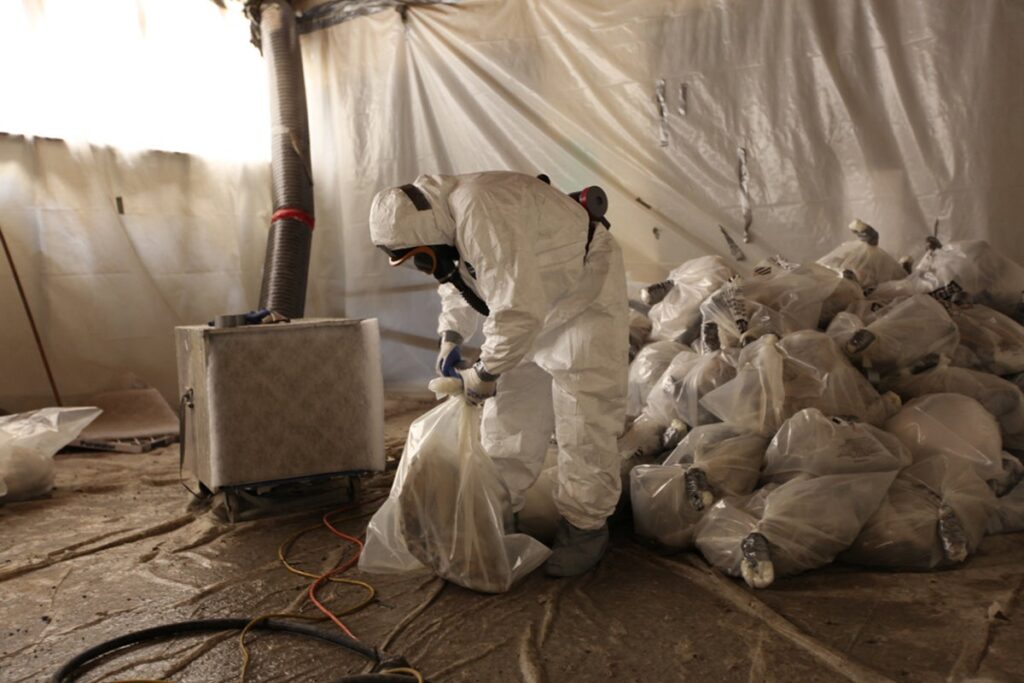
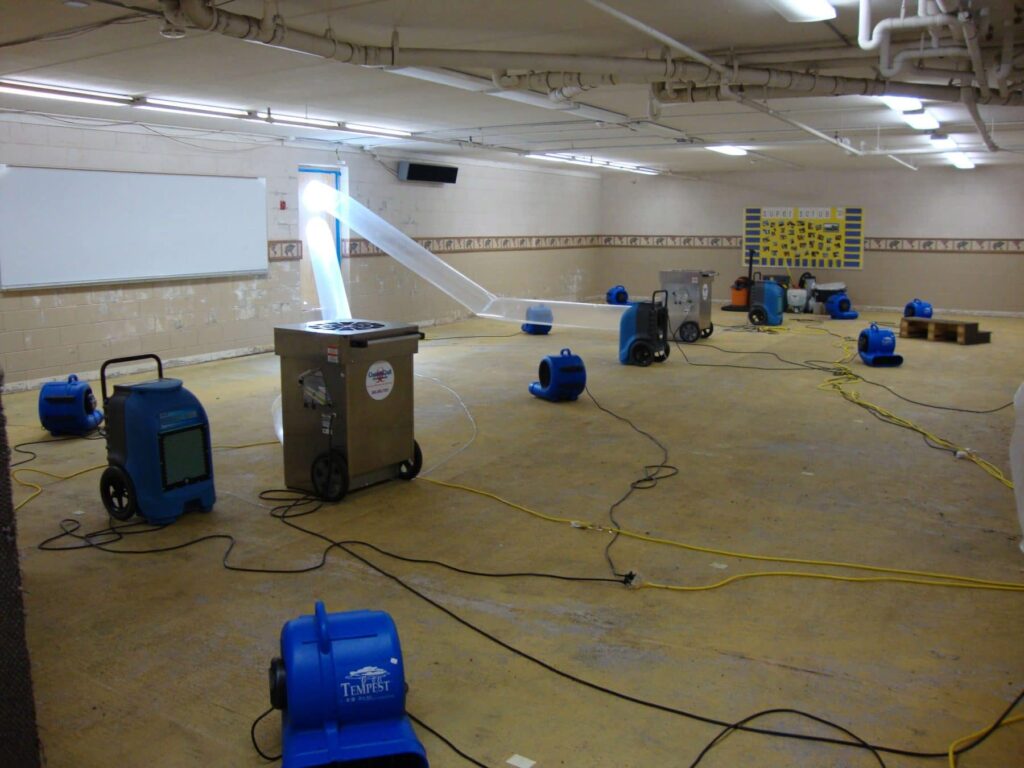
To maintain negative pressure and capture airborne fibers, Rapid Response deploys negative air machines equipped with HEPA filtration units inside the containment. Negative air systems pull air from the containment through HEPA filters before release to the exterior, creating an inward airflow that prevents airborne asbestos fibers from escaping. This engineering control, combined with regular checkpoint monitoring of pressure differentials and filter integrity, is a critical element of fiber control during removal.
5) Wet methods and careful removal techniques
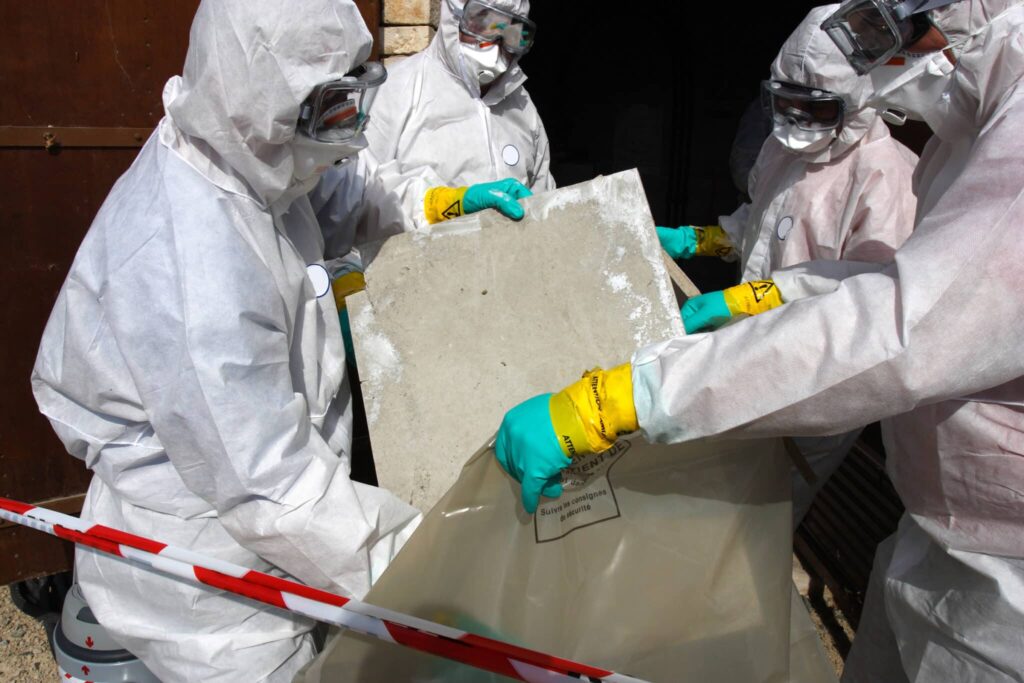
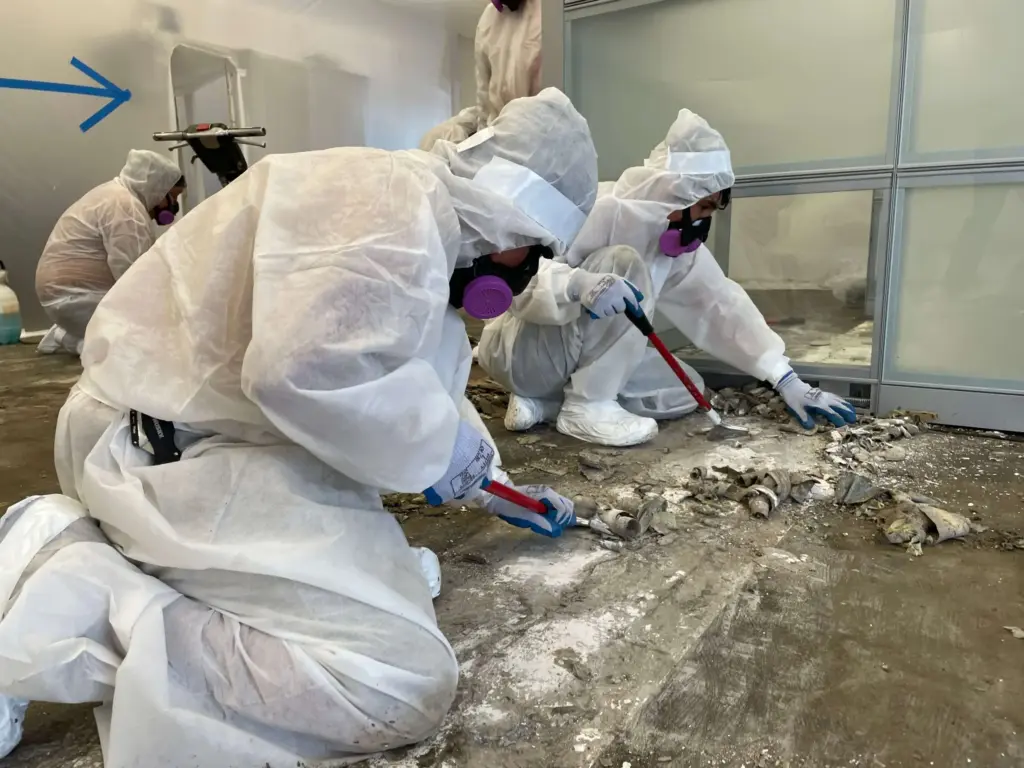
Wet methods are used to suppress dust during removal. Rapid Response technicians wet asbestos materials adequately before and during disturbance to reduce fiber liberation. Materials are removed intact where possible, using manual hand tools rather than power tools that could aerosolize fibers. When mechanical tools are unavoidable, appropriate controls and wetting are applied to minimize airborne release. All removed materials are double-bagged or placed in labeled, leak-tight containers for safe handling and transport.
6) Worker safety: training, PPE, and decontamination
Personnel performing asbestos work are licensed and certified technicians who wear suitable personal protective equipment (PPE), including full‑face or half‑face respirators with HEPA cartridges or supplied‑air respirators as required, disposable coveralls, gloves, and protective footwear. Rapid Response enforces strict decontamination procedures: technicians pass through a multi‑stage decon area to remove contaminated clothing and HEPA vacuum themselves before entering clean zones. The company documents worker qualifications and training, ensuring that only trained, properly equipped staff do abatement work.
7) Waste packaging, transport, and EPA‑approved disposal
Asbestos waste generated during removal is handled as regulated waste. Rapid Response packages waste using approved leak‑tight containers or sealed, labeled asbestos disposal bags. The company arranges transport to EPA‑approved disposal facilities that accept asbestos waste. Chain‑of‑custody and disposal manifests are prepared and provided to the homeowner, documenting how much material was removed and where it was disposed of — a requirement for regulatory compliance and homeowner records.
8) Air monitoring and post‑remediation clearance testing
Air monitoring is performed during and after abatement. Rapid Response conducts clearance testing after cleanup using appropriate methods (such as PCM or TEM as required by regulatory guidance) to confirm airborne fiber levels are within acceptable limits for re‑occupancy. The company provides written post‑remediation reports and clearance results that demonstrate the effectiveness of containment, removal techniques, and filtration systems. Clearance results give homeowners confidence that the property is safe to re‑enter.
9) Final cleanup, restoration, and homeowner walkthrough
Following successful clearance testing, Rapid Response completes final cleaning and restoration tasks. This includes removing containment materials, performing HEPA vacuuming and wet wiping of work area surfaces, and returning the home to a clean, safe condition. A documented walkthrough with the homeowner reviews the work performed, presents the clearance report and disposal manifests, and explains any recommendations for future monitoring or maintenance.
How Rapid Response integrates local Grand Junction knowledge into safety planning
Working in Grand Junction requires knowledge of local disposal routes, permit offices, and environmental rules. Rapid Response leverages its Grand Junction base to deliver faster response times, local permit handling, and coordination with area waste facilities and inspectors. For homeowners in neighborhoods such as Redlands, Fruita Junction, or near the Colorado River corridor, Rapid Response’s familiarity with local road access, seasonal weather patterns, and nearby educational institutions like Colorado Mesa University helps minimize disruptions while meeting regulatory obligations.
Case examples and real-world scenarios from Rapid Response work in Grand Junction
Rapid Response documents a range of residential and commercial projects they have completed across Grand Junction and Western Colorado, from emergency discovery calls in occupied homes to planned abatement for renovation projects. Examples include:
- Emergency response to disturbed friable materials during a home renovation where Rapid Response mobilized quickly, established containment, and completed safe removal with minimal interruption to the household.
- Planned abatement during a multi‑phase commercial remodel near downtown Grand Junction where Rapid Response coordinated permits, performed staged containment to allow portions of the facility to remain operational, and provided all regulatory documentation for the client.
- Asbestos inspection and testing followed by targeted removal in older homes in west Grand Junction neighborhoods, with Rapid Response providing written estimates, documented air clearance testing, and disposal manifests to ensure homeowner peace of mind.
These project types demonstrate the company’s capacity to scale controls for small residential removals as well as larger, phased commercial abatement in Grand Junction.
Documentation and transparency: records Rapid Response provides to homeowners
Clear documentation is a hallmark of Rapid Response’s asbestos service offering. Homeowners receive a written scope of work and a detailed cost estimate before work begins. During and after the project, Rapid Response supplies air monitoring logs, chain‑of‑custody paperwork for samples, laboratory results for asbestos testing, disposal manifests for regulated waste, permit copies and regulatory notifications as applicable, and a final post‑remediation clearance report. These documents are essential for future property transactions, insurance claims, and homeowner records.
Permits, notifications, and regulatory compliance
Rapid Response handles permits and notifications required for regulated asbestos work. For residential projects in Grand Junction, certain types of asbestos work trigger state and local reporting requirements; Rapid Response coordinates these filings and works with local environmental and building authorities to ensure compliance. For larger commercial or school projects, additional documentation and coordination with inspectors may be required, and Rapid Response has experience meeting these obligations while minimizing project delays.
Frequently used equipment and materials for safe asbestos abatement
- HEPA‑filtered negative air machines: to maintain negative pressure inside containment units.
- 6‑mil polyethylene sheeting and tape: for airtight containment construction.
- Decontamination units: portable showers or three‑chamber decon systems for worker hygiene.
- HEPA vacuums: for cleanup of settled dust and final cleaning.
- Respirators and supplied air systems: to protect workers from inhalation hazards.
- Wetting agents and spray applicators: to suppress dust during removal.
- Labeled asbestos disposal bags and approved containers: for regulated waste packaging and transport.
Worker qualifications, licensing, and training
Rapid Response employs licensed asbestos technicians and abatement supervisors trained in recognized industry methods and safety practices. Technicians receive training in proper removal techniques, use of PPE, containment construction, decontamination procedures, and air monitoring protocols. Supervisors manage site safety, ensure compliance with written plans, and maintain communication with homeowners and local authorities. The company’s team is insured and prepared to handle emergency mobilization in Grand Junction.
Common residential asbestos scenarios and Rapid Response’s recommended approach
Several residential situations commonly trigger asbestos abatement in Grand Junction homes; Rapid Response tailors safety measures to each scenario:
- Disturbed friable insulation or pipe wrap: Immediate containment, wetting, and removal by licensed technicians, followed by clearance testing.
- Asbestos‑containing floor tile or mastic during remodels: Controlled removal using wet methods and HEPA capture; in some low‑risk, intact tile scenarios, encapsulation may be an option that Rapid Response evaluates.
- Roofing or siding replacement with suspected asbestos cement: Careful handling and transport of friable or non‑friable cement materials to EPA‑approved disposal facilities.
- Emergency discovery during renovation: Rapid Response provides fast mobilization, immediate containment to protect occupants, and expedited testing and removal.
Costs and transparent pricing for Grand Junction homeowners
Rapid Response provides written estimates with a line‑item breakdown of costs for containment, labor, testing, air monitoring, and disposal. Pricing depends on the scope and complexity of the job, whether emergency mobilization is required, the amount of regulated waste, and whether permit or environmental coordination is needed. Rapid Response emphasizes transparent pricing and documentation so there are no surprises for Grand Junction homeowners.
How Rapid Response ensures community safety and minimizes neighborhood impact
Beyond the immediate worksite, Rapid Response takes steps to reduce neighborhood impacts during asbestos projects in Grand Junction. These measures include secure transport of asbestos waste to approved disposal facilities, minimizing truck idling and traffic impacts, scheduling work to align with local regulations and community needs, and providing homeowners with clear instructions to avoid adjacent areas while containment is in place. For projects near schools, parks, or high‑traffic commercial areas, the company coordinates with property managers and local officials as part of their compliance and communication process.
Preparing your Grand Junction home for an asbestos abatement project
To help projects run smoothly and safely, Rapid Response recommends homeowners take the following steps before abatement begins:
- Clear personal items and furnishings from the work area where feasible to minimize handling and potential contamination.
- Identify and inform Rapid Response of any special considerations (pets, vulnerable occupants, accessibility constraints).
- Follow Rapid Response’s pre‑work guidance about HVAC isolation, power access, or temporary relocation if advised.
- Keep children and pets away from contained areas and follow all posted signage until the clearance report confirms re‑occupation is safe.
Why homeowners in Grand Junction choose Rapid Response
Grand Junction homeowners choose Rapid Response for asbestos work because the company combines local experience with industry‑standard safety practices: rapid emergency response, licensed technicians, written scopes and transparent pricing, full regulatory coordination, use of wet methods and negative air systems, on‑site decontamination and HEPA filtration, and documented clearance testing and disposal manifests. These elements together form a defensible, documented approach to asbestos safety that protects residents and property values.
Internal linking to help you learn more
For homeowners seeking additional information about Rapid Response’s asbestos services and process, see the company’s dedicated Grand Junction asbestos service page for detailed service descriptions, contact options, and sample documentation described earlier — Rapid Response’s Grand Junction asbestos service page provides a direct overview of inspection, testing, abatement, disposal, and clearance reporting.
Rapid Response’s Grand Junction asbestos service page provides a direct overview of inspection, testing, abatement, disposal, and clearance reporting
To return to the company’s main site and explore other restoration services (water, fire, mold, radon, and specialty cleaning), visit Rapid Response’s homepage for contact details, service area information, and customer reviews.
Rapid Response: trusted local restoration & abatement services for Grand Junction and Western Colorado
Local context — Grand Junction neighborhoods, landmarks, and logistics
Understanding Grand Junction’s geography and neighborhoods helps Rapid Response plan logistics for safe removal and disposal. Common service areas include the Grand Junction downtown corridor near the Colorado River and the historic areas around Hilltop and Lincoln Park, residential zones like Redlands and Orchard Mesa, and nearby communities such as Fruita and Clifton. Projects near Colorado Mesa University, schools, and parks like Canyon View Park often require additional coordination and timing considerations to avoid disrupting campus operations or recreational activities. Knowledge of local highways and intersections (including I‑70 access points and major corridors) also helps the company route disposal transport efficiently to approved facilities while minimizing neighborhood disruption.
What homeowners should expect during and after abatement
During abatement, homeowners should expect restricted access to contained areas, clear signage, trained technicians working in PPE, and visible controls such as negative airflow machines and containment sheeting. After projects pass clearance testing, homeowners receive the final report, disposal manifests, and any recommendations for maintenance or follow‑up testing. Rapid Response stands behind its work with documented procedures and encourages homeowners to keep all provided paperwork for their records and future property transactions.
Emergency scenarios: rapid response for unexpected asbestos discovery
When asbestos is unexpectedly discovered during renovation, demolition, or after storm damage, Rapid Response advertises emergency on‑site arrival to Grand Junction properties, rapid containment to protect occupants, expedited sampling and lab testing, and accelerated removal and disposal when required. Their ability to mobilize quickly and document the emergency response — including scope revisions, emergency charges, and final clearance testing — is vital to returning homes to safe condition with clear records for insurers and regulators.
Comparing removal vs. encapsulation: how Rapid Response decides the best path
Not all asbestos situations require full removal. Rapid Response evaluates each material’s condition and the planned activity. For intact, non‑friable materials that are not being disturbed, encapsulation or enclosure may be safer and more cost‑effective than full removal. For materials that are friable, damaged, or will be disturbed by renovation, full removal with containment, negative air, and proper disposal is typically recommended. Rapid Response provides homeowners with the pros and cons, cost estimates, and the safety implications of each option so clients can make informed decisions based on risk and planned building use.
Communication, customer care, and dispute prevention
Communication is central to Rapid Response’s approach: homeowners receive a clear written scope, notification of permit filings, and updates throughout the project. Post‑job, Rapid Response supplies all test results, manifests, and clearance reports to avoid misunderstandings and provide full transparency. This documented approach helps prevent disputes, supports insurance claims, and documents regulatory compliance for future property transactions.
Insurance, warranty, and post‑project support
Rapid Response works with homeowners and insurance providers to document asbestos work for claims. The company is insured and provides documentation that insurers commonly require for payment. While asbestos abatement itself does not change a building’s construction warranty, Rapid Response offers workmanship documentation and stands behind the documented procedures followed during abatement, helping homeowners understand the protections and responsibilities after the project.
Environmental stewardship and disposal accountability
Proper disposal is a key environmental responsibility in asbestos work. Rapid Response packages regulated asbestos waste and transports it to EPA‑approved facilities, providing homeowners with manifests and disposal receipts. This chain‑of‑custody approach ensures that asbestos materials do not end up in unauthorized sites and that Grand Junction neighborhoods remain protected from improper waste handling.
How to verify a contractor’s asbestos credentials in Grand Junction
Homeowners should verify that any abatement contractor is licensed, insured, and provides references and documentation. Rapid Response publicizes that their technicians are licensed and certified and that the company is insured; homeowners are encouraged to ask for copies of licenses, training records, sample chain‑of‑custody forms, and recent clearance reports to confirm qualifications. Checking local references and reviews from Grand Junction customers also helps validate experience and local reputation.
Preparing for long‑term property considerations after asbestos abatement
After abatement and clearance, homeowners should maintain records of all testing, removal manifests, and the final clearance report. These documents are important for future renovations, property sales, and insurance claims. Rapid Response ensures homeowners receive a complete packet of documentation describing what was removed, where it was disposed, and what testing confirmed the site was safe for re‑occupation.
Conclusion and next steps for Grand Junction homeowners
When asbestos is discovered, choosing a firm that combines licensed technicians, documented procedures, local knowledge, and transparent communication is essential. Rapid Response provides Grand Junction homeowners with emergency mobilization, thorough inspection and testing, detailed written plans, engineered containment and negative air systems, wet methods, trained staff with appropriate PPE and decontamination, regulated waste disposal to approved facilities, and post‑remediation clearance testing and documentation. Homeowners should request written scopes, clearance reports, and disposal manifests, and work with licensed abatement professionals who understand local permits and disposal logistics.
If you suspect asbestos in your Grand Junction home — whether during a renovation near Hilltop, a remodel close to Colorado Mesa University, or routine maintenance in the Redlands — contact Rapid Response for an inspection, a written plan, and a transparent, safety‑first abatement process that protects people, property, and the community.
Frequently Asked Questions
What immediate steps does Rapid Response take when asbestos is discovered during a renovation?
When asbestos is discovered unexpectedly during a renovation, Rapid Response emphasizes rapid containment and risk reduction as the first priority. Their team typically mobilizes quickly to the site, establishes an immediate barrier around the disturbance, and restricts access to the affected area to prevent additional fiber release. Technicians will collect representative samples for laboratory testing to confirm asbestos content and assess whether the material is friable or non‑friable. If immediate removal is required for safety, the company will prepare an expedited written scope and estimate, set up containment with negative air systems, and use wet methods to suppress dust during removal. Homeowners receive documentation of the emergency mobilization and subsequent actions, including sample chain‑of‑custody and laboratory results. Rapid Response also advises on whether temporary relocation is recommended and coordinates with insurance carriers when applicable.
How does Rapid Response contain asbestos to prevent fiber spread to other rooms?
Containment is a primary control method used by Rapid Response to keep asbestos fibers from spreading beyond the work zone. The containment typically includes constructing airtight barriers with heavy‑gauge polyethylene sheeting, sealing doorways and vents, and installing a decontamination unit that separates clean and dirty areas for workers. Negative air machines with HEPA filtration are placed inside the containment to create negative pressure, which draws air into the work area and prevents contaminated air from escaping. Technicians follow strict entry and exit procedures, use designated walkways, and post signage to keep residents away. After removal, HEPA vacuuming and wet wiping of surfaces inside and immediately adjacent to the containment area are performed prior to clearance testing to ensure the broader home remains unaffected.
What personal protective equipment (PPE) do Rapid Response technicians use during residential asbestos removal?
Rapid Response technicians wear industry‑standard PPE designed for asbestos work. This typically includes disposable or launderable full‑body coveralls, gloves, and protective footwear covers. For respiratory protection, technicians use respirators appropriate to the task — from P100 cartridges in half‑ or full‑face respirators for lower‑risk tasks to powered air‑purifying respirators (PAPRs) or supplied‑air respirators for higher exposures or specific regulatory requirements. Because decontamination is critical, the company sets up a multi‑stage decon area where workers remove contaminated clothing and equipment before entering clean zones. The company documents training and PPE use as part of the project record to demonstrate compliance and worker safety.
Does Rapid Response perform air monitoring during and after asbestos removal?
Yes, air monitoring is an important part of Rapid Response’s safety program. The company performs air monitoring during removal to check for airborne fiber concentrations and to confirm negative pressure is maintained inside containment. After cleanup, Rapid Response conducts clearance testing using appropriate analytical methods to confirm airborne fiber levels are below regulatory limits for re‑occupancy. The final clearance report, which is provided to the homeowner, includes sampling results and demonstrates that the abated area meets the criteria for safe re‑entry. Air monitoring logs and chain‑of‑custody records for samples are also provided for homeowner and regulatory records.
How does Rapid Response handle asbestos waste and where is it disposed?
Asbestos waste is treated as regulated material and Rapid Response packages it in labeled, leak‑tight containers or double‑bagged asbestos disposal bags according to regulatory requirements. The company arranges transport to EPA‑approved disposal facilities that accept asbestos waste, ensuring the chain of custody from the job site to the landfill is documented. Homeowners receive disposal manifests and receipts showing quantities removed and the disposal facility used. This documented disposal process prevents improper dumping and protects the Grand Junction community from environmental contamination. Rapid Response’s familiarity with local disposal routing helps ensure timely transport and compliance with state and federal waste rules.
What documentation will a homeowner receive after asbestos abatement is completed?
After a project, Rapid Response provides homeowners with a packet of documentation that typically includes the written scope of work and estimate, laboratory test results for material samples, chain‑of‑custody forms for those samples, daily air monitoring logs, final clearance testing results, copies of any permits or notifications filed, and disposal manifests or receipts from the approved facility. This documentation is essential for insurance claims, future renovations, and real estate transactions. The final clearance report confirms that the area has been cleaned and tested to acceptable levels and that the home is safe to re‑occupy.
Are there alternatives to full removal that Rapid Response might recommend for certain materials?
Yes. For some intact, non‑friable asbestos materials that are not scheduled for disturbance, Rapid Response may evaluate and recommend alternatives such as encapsulation or enclosure instead of full removal. Encapsulation involves applying a sealant to the material to bind asbestos fibers and prevent release, while enclosure uses physical barriers to isolate the material. These options reduce immediate disturbance risk and can be more cost‑effective. However, if renovation work will disturb the material or if the asbestos is friable or damaged, full removal under strict containment and disposal procedures is generally the safer course. Rapid Response provides pros, cons, and cost estimates for each option so homeowners can choose based on risk, budget, and planned future use.
How long does a typical residential asbestos removal take in Grand Junction?
Project duration depends on the scope and complexity of the work. Small, targeted removals (for example, a small area of pipe insulation or a few floor tiles) can sometimes be completed in a day once containment is set up and permits are in order. More extensive removals or phased projects tied to renovations can take several days to weeks, especially if permit coordination, multi‑room containment, or staged clearance testing is required. Rapid Response provides a written timeline in the project scope and works to minimize homeowner disruption while ensuring safety and compliance.
How does Rapid Response coordinate with local Grand Junction authorities and schools?
When projects involve public buildings, schools, or commercial facilities in Grand Junction, Rapid Response coordinates closely with facility managers, local building inspectors, and regulatory agencies to schedule work during low‑impact windows and to ensure required notifications and permits are filed. For school projects or work near high‑traffic public areas like parks or Colorado Mesa University, the company may implement additional controls, stagger work to keep portions of facilities operational, and provide pre‑project briefings to administrators and stakeholders. This coordination helps ensure projects meet both safety standards and community needs.
How can Grand Junction homeowners verify Rapid Response’s asbestos credentials and references?
Homeowners should request proof of licensing, insurance, and technician certifications before hiring any abatement contractor. Rapid Response publishes that it employs licensed and certified technicians and that the company is insured. Prospective clients can ask for copies of licenses, sample clearance reports, disposal manifests, and references from recent Grand Junction projects. Checking local consumer resources and reviews, and confirming regulatory filings or permit records with local authorities, are additional steps homeowners can take to validate experience and reliability.
Closing guidance and how to contact Rapid Response
If you suspect asbestos or need an inspection in Grand Junction, contact Rapid Response for a professional assessment, a written scope, and a transparent, safety‑centered abatement plan. The company’s Grand Junction asbestos service page and main website provide contact information, service area details, and examples of services offered. Early, professional assessment and documented removal are the best ways to protect your family, your property, and your neighborhood from asbestos risks.